
Construction + Process
What happens after your first conversation with Edge Crew?
By Jonathan Cortez · Edge Crew Custom Homes
Updated September 15, 2026
We turn your priorities into a concept, develop the plans and budget together, then prepare the home for construction.
The first conversation helps us understand your property, how you want to live and the priorities behind the home. A paid Design Agreement then moves the work into concept development. From there, plans, selections and budgeting progress together before final project documents and the Construction Agreement lead into the build.
You do not need to arrive with every answer. You do need a team that helps you ask the right questions in a sensible order.
1. Vision to concept
The initial consultation is complimentary. We discuss your land, daily life, priorities and the character of the home you want to create. Property information and a few useful examples are more helpful than hundreds of unrelated inspiration images.
The Design Agreement defines the next stage of work and moves that conversation toward a first hand-drawn concept. This is where an idea begins to become a home with actual relationships among rooms and the site.
2. Plans and selections
The plan develops alongside materials and budgeting. By roughly 75–80% design, the architecture, selections and investment range are moving together.
Why does that matter? A floor plan alone does not explain the whole home. Windows, cabinetry, finishes and equipment influence both the design and the cost. Considering them together gives decisions context.
3. Final project documents
Plans, specifications, selections, pricing and permitting are resolved before construction begins. Financing requirements must also be coordinated.
This stage should leave you understanding what is being built, which documents describe it and what commitments the construction agreement creates. Questions are easier to resolve when everyone is looking at the same current information.
4. Construction and communication
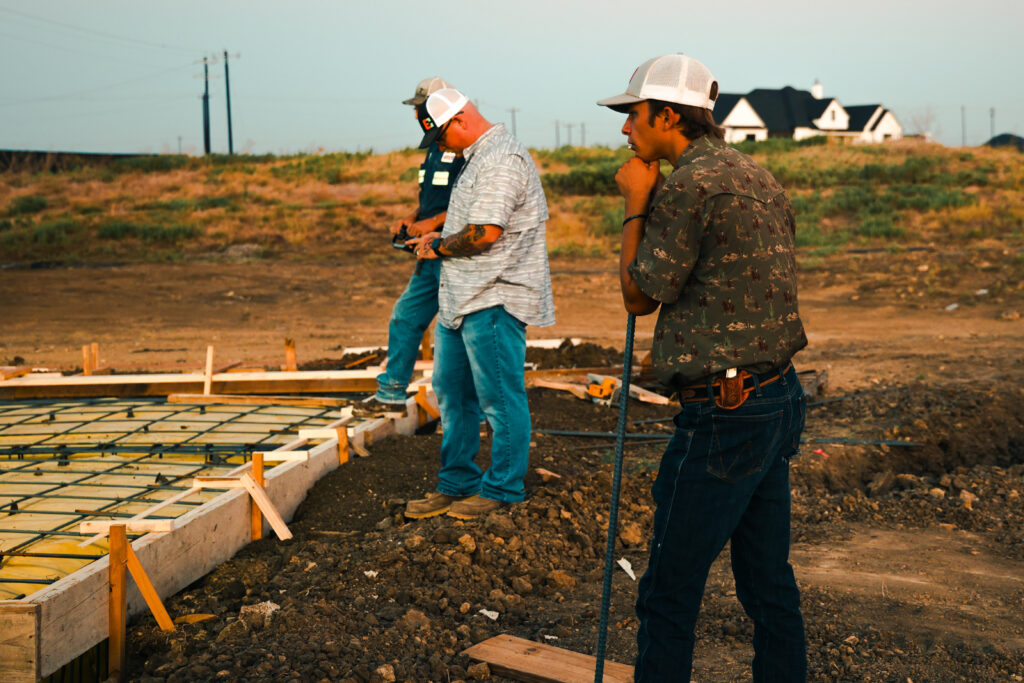
After the Construction Agreement, one accountable team carries the decisions into the field. Weekly Microsoft Teams conversations, progress photography and video keep you involved without expecting you to manage the trades yourself.
Your role remains important: review decisions on time, use the agreed change process and raise questions promptly. The final walkthrough and completion requirements should also be understood before move-in approaches.
A useful first-meeting list
Bring the property location or parcel information, any survey or existing plans, your must-haves, your investment comfort level and the reasons behind your preferred timing. If you do not own land yet, say so early—the property and the home need to be considered together.
See the visual overview on our Process page, or start a conversation about where you are now.
01 / Property
Bring the location, survey or available land information.
02 / Priorities
Explain your must-haves and how you want to live.
03 / Investment
Discuss your budget comfort level and reasons for your timing.
Jonathan Cortez is a third-generation builder at Edge Crew Custom Homes, based in Bridgeport, Texas. Our work brings design, selections, budgeting and construction together for custom homes in North Texas. Meet our family.