
Energy + Performance
What does insulation R-value actually tell you?
By Jonathan Cortez · Edge Crew Custom Homes
Updated September 15, 2026
Earlier Edge Crew coverage: October 17, 2017
R-value measures a material’s resistance to heat flow. It doesn’t describe the whole home.
R-value describes resistance to heat flow through a material. A higher R-value means greater resistance under the stated conditions. It does not, by itself, tell you how an entire wall or home will perform.
That distinction matters when someone compares two homes using only an insulation label. The installed assembly includes framing, connections, openings and possible gaps as well as insulation.
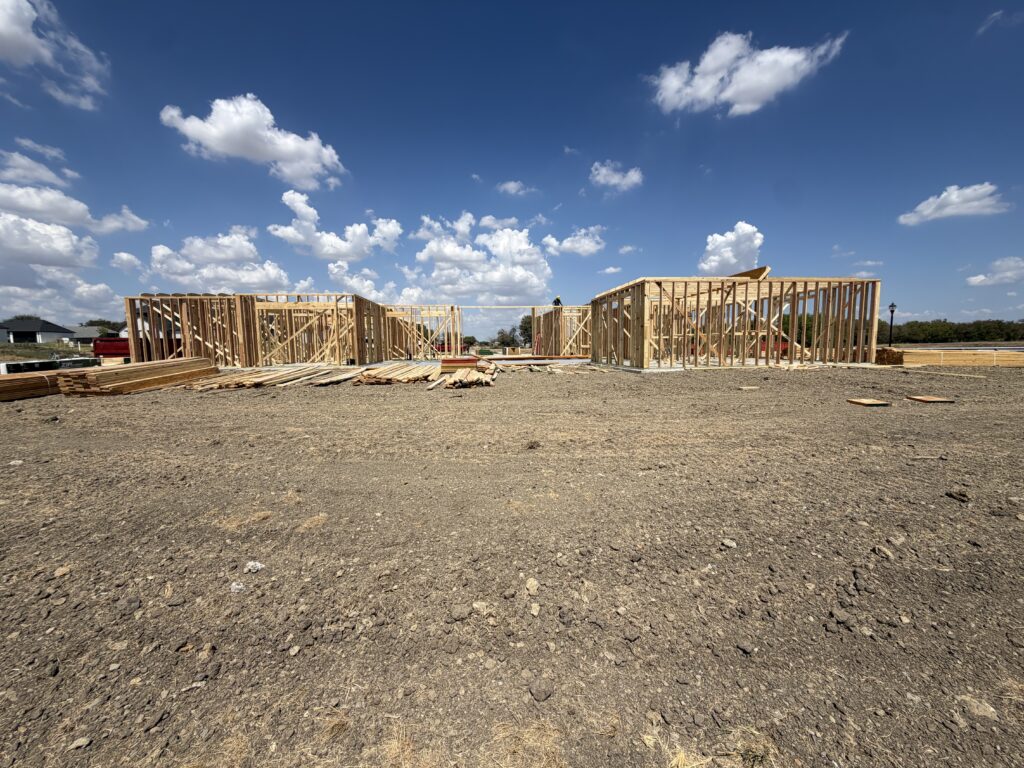
Separate the product from the assembly
Insulation between studs is one part of a wall. Heat can also move through framing and other components. Ask the design team to explain the proposed wall or roof assembly, including any continuous insulation and how the layers work together.
Do not add numbers from unrelated products and assume the result represents the whole assembly. Compare documented specifications for the actual construction being proposed.
Installation is part of the decision
A specified material needs to be installed to its intended coverage and thickness, with attention to gaps, compression and transitions. Difficult locations around services and framing deserve review before they are covered.
Ask who verifies the work and what the inspection includes. Photographs can help document concealed locations, but they do not replace appropriate inspection or testing.
Insulation and air sealing do different jobs
Insulation resists heat flow. Air sealing limits uncontrolled air movement. A material may contribute to both when designed and installed for that purpose, but an insulation choice does not automatically establish a continuous air barrier throughout the home.
The Department of Energy’s air-sealing guide explains this distinction. Ask how penetrations and transitions will be sealed and how ventilation is coordinated with the finished enclosure.
Choose a coordinated approach
The appropriate insulation strategy depends on the assembly, climate, applicable requirements, moisture considerations and project goals. Ask for the reasoning behind the recommendation instead of treating one material as universally best.
Your comparison should cover the full assembly, installation scope, verification and cost. A useful proposal explains what is being built and how the team will know it was installed properly. See how these decisions fit the whole home.
01 / Assembly
What is the performance of the complete wall or roof?
02 / Installation
How will coverage, gaps and transitions be checked?
03 / Air sealing
What limits uncontrolled air movement through the enclosure?
Jonathan Cortez is a third-generation builder at Edge Crew Custom Homes, based in Bridgeport, Texas. Our work brings design, selections, budgeting and construction together for custom homes in North Texas. Meet our family.